NOTDURFT
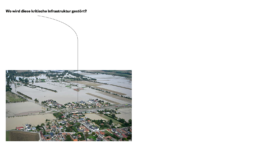
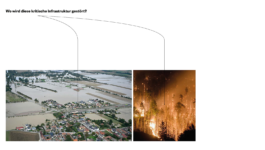
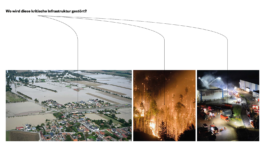
The increasing scale of climate change is manifesting itself ever more frequently in the form of severe environmental disasters. Extreme weather events such as heavy rainfall, flooding, prolonged drought periods, and the resulting wildfires are increasing in both intensity and frequency worldwide. Such natural events not only cause significant damage to infrastructure but also directly affect the basic public services of the affected population. This includes access to hygienic and safe sanitation.
Against this background, a mobile, inflatable toilet system is to be developed that is specifically designed for use in crisis situations. This system is intended to be primarily integrated into the operational structures of the fire brigade as well as the Federal Agency for Technical Relief (THW). The reason for this is obvious: in acute emergency situations, firefighters and THW personnel are among the first organizations to arrive on site. They specialize in providing rapid and effective assistance under difficult conditions and have well-established logistics and operational structures.
COURSE: Stilles Örtchen
Supervised by: Prof. Dieter Hofmann and KM Josua Roters


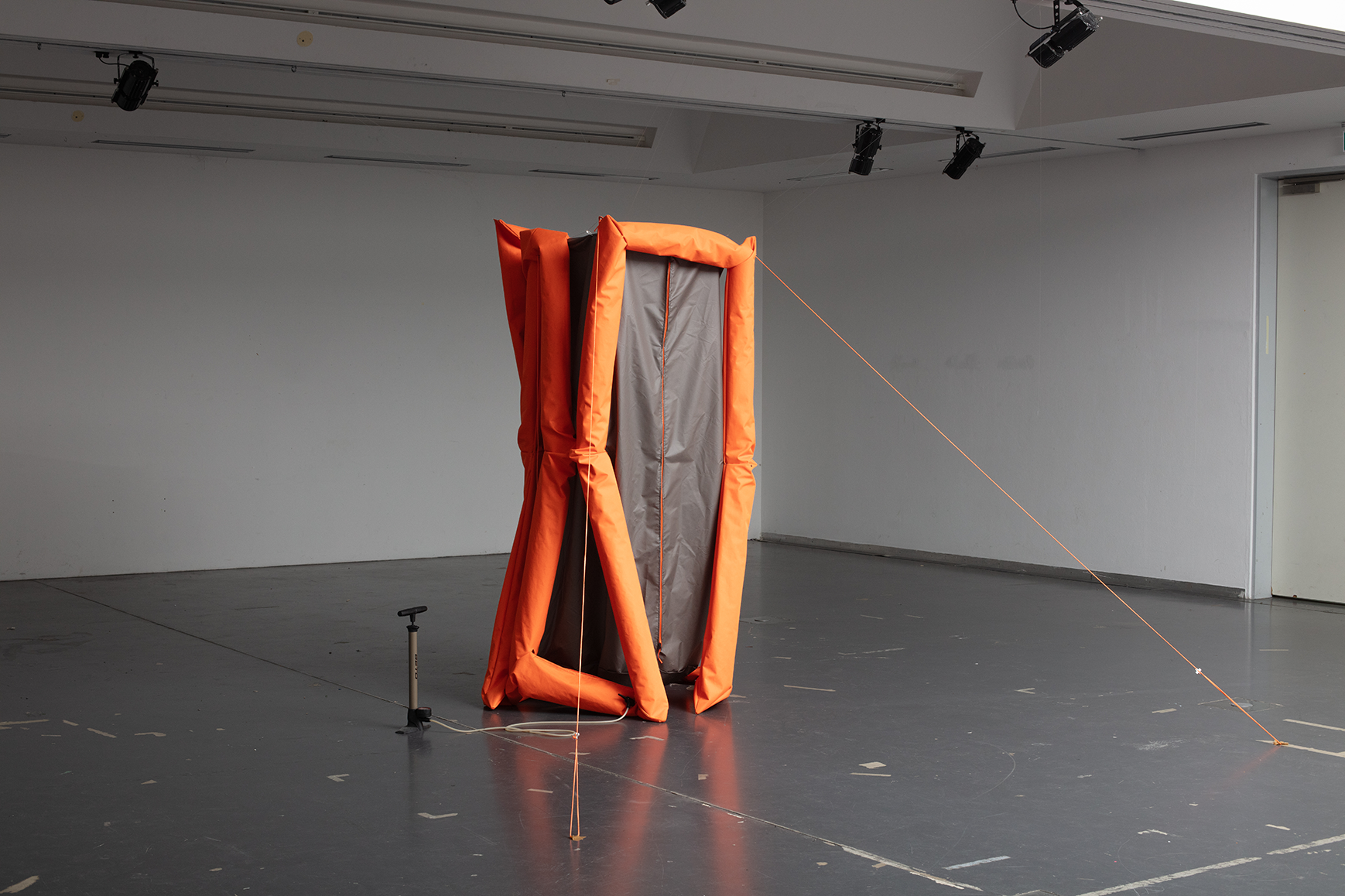
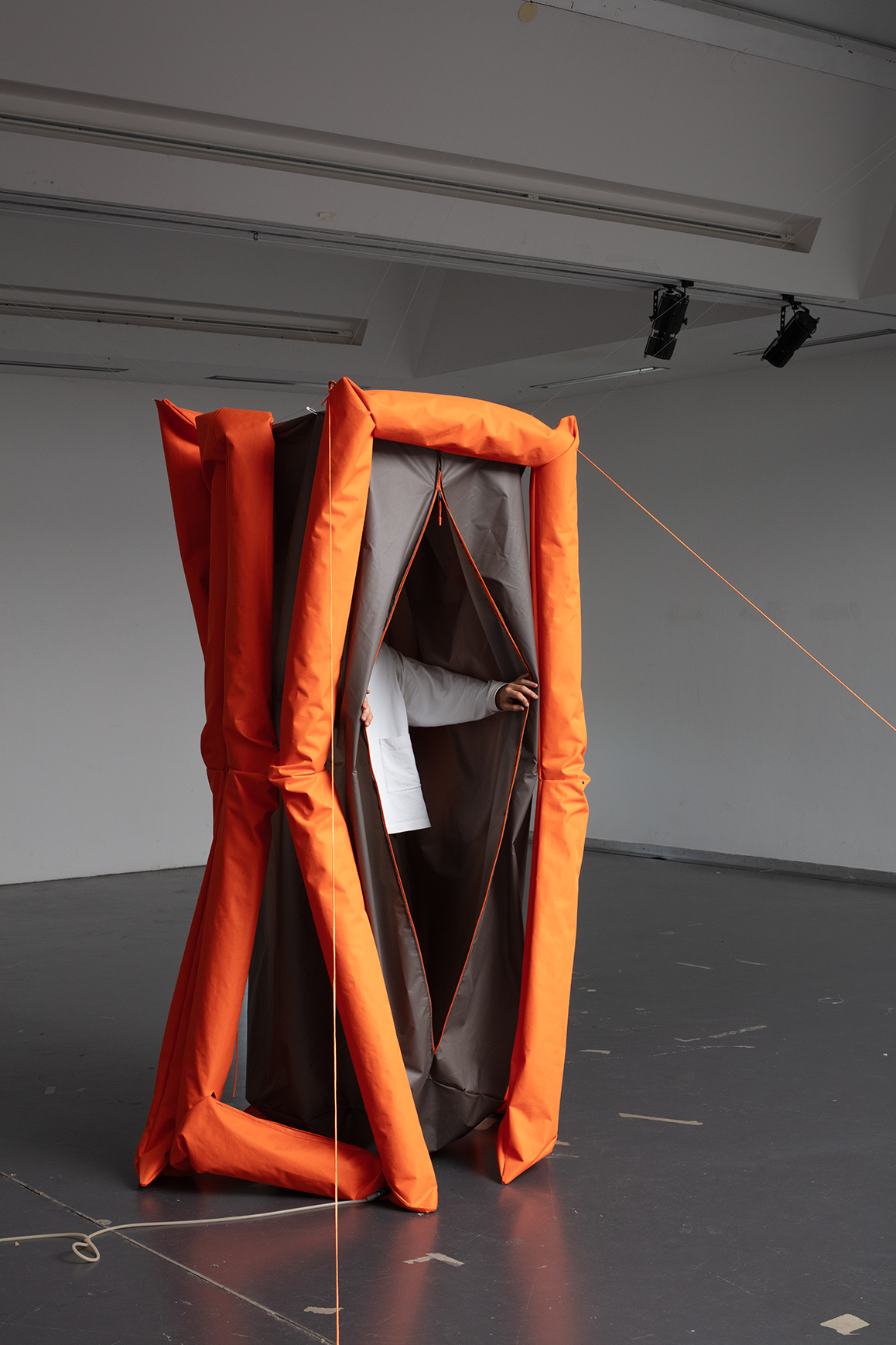
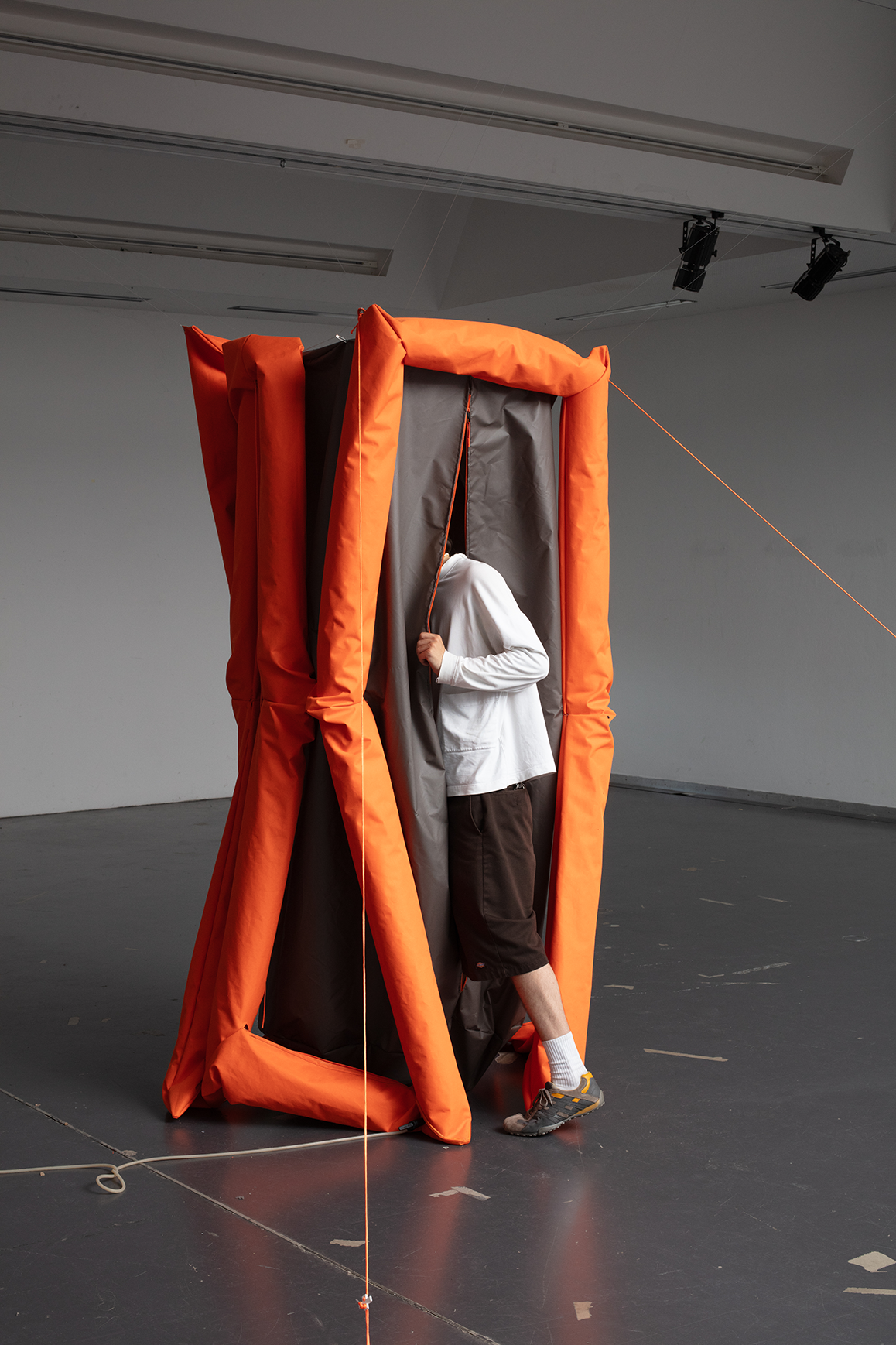
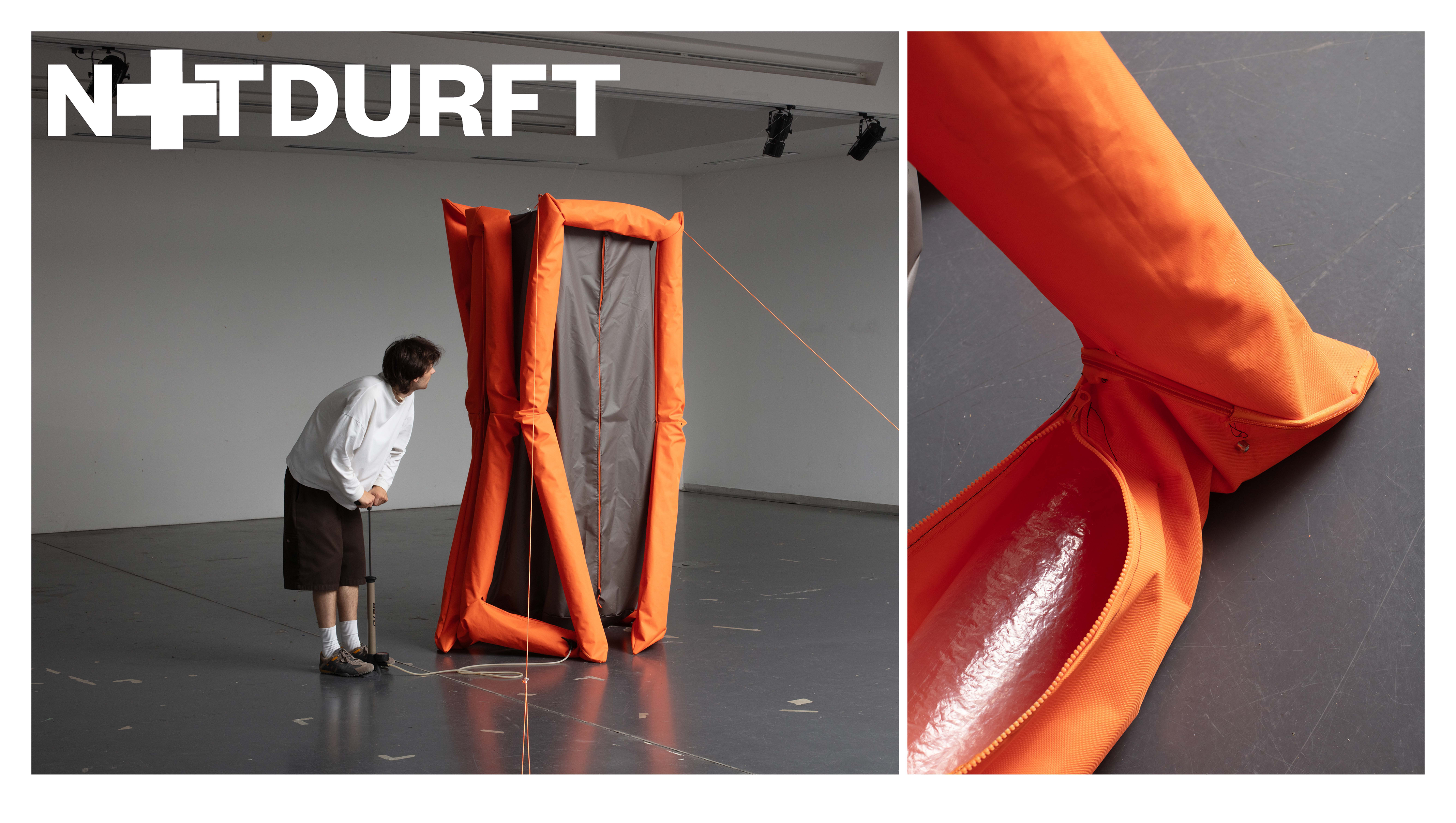
A tent was designed that draws on the technical aesthetic of fire brigade equipment. The inflatable part of the tent consists of two components: an outer shell made from one-sided coated polyester. Polyester is a highly resistant and durable fabric. As a result, the tent can withstand increased stress caused by wind and, due to its UV-resistant properties, can be exposed to sunlight for long periods without the textile losing its structural strength. The outer shell provides stability and protection while also defining the shape of the tent.
Running through its interior is a hose made of PE. Due to its elasticity, the material is well suited for use in inflatable structures. Several air chambers that must be inflated independently ensure that the structure retains its shape in the event of leaks. If sharp objects were to puncture the hose, the remaining air chambers would still be able to maintain the structure.
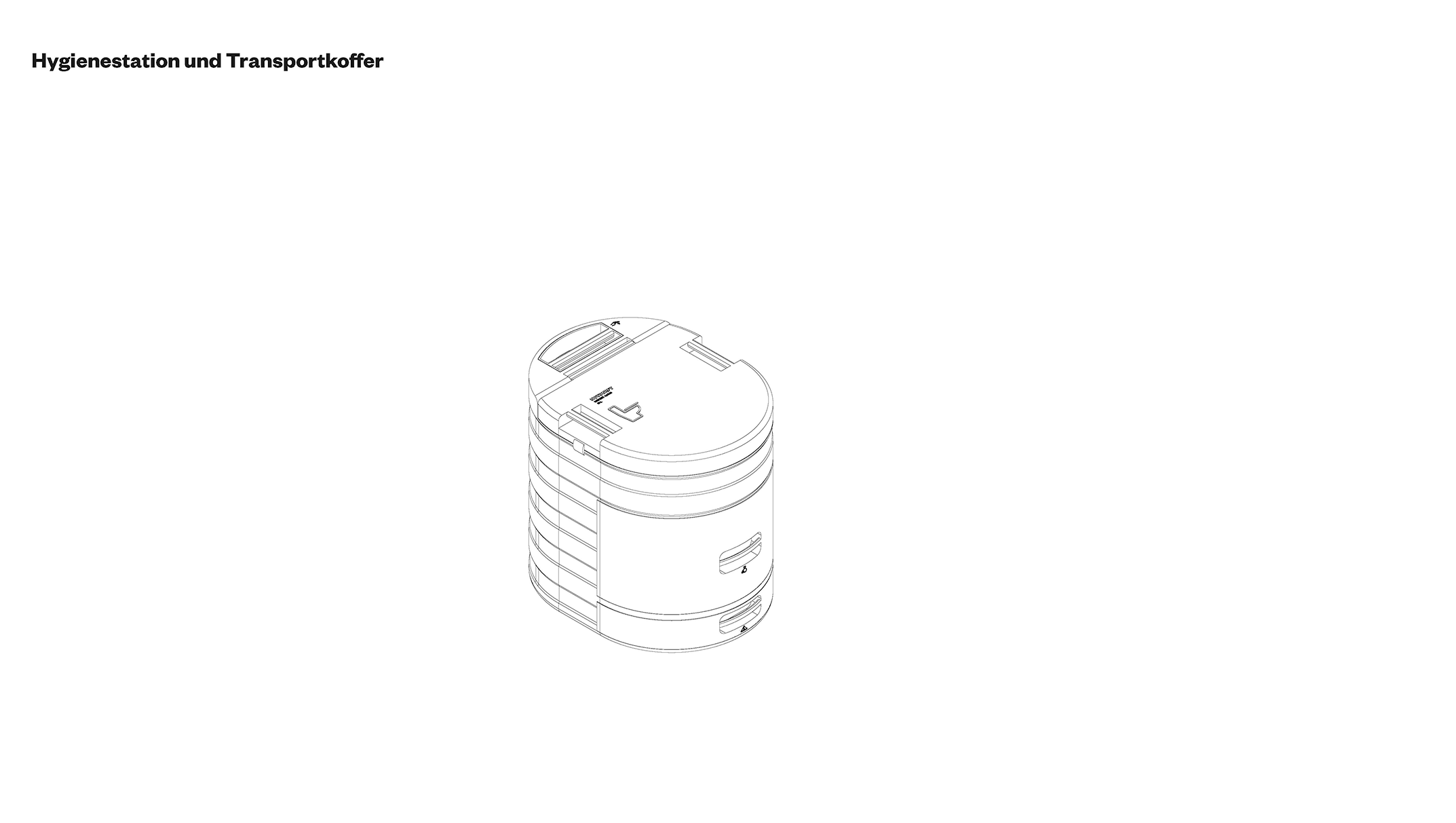
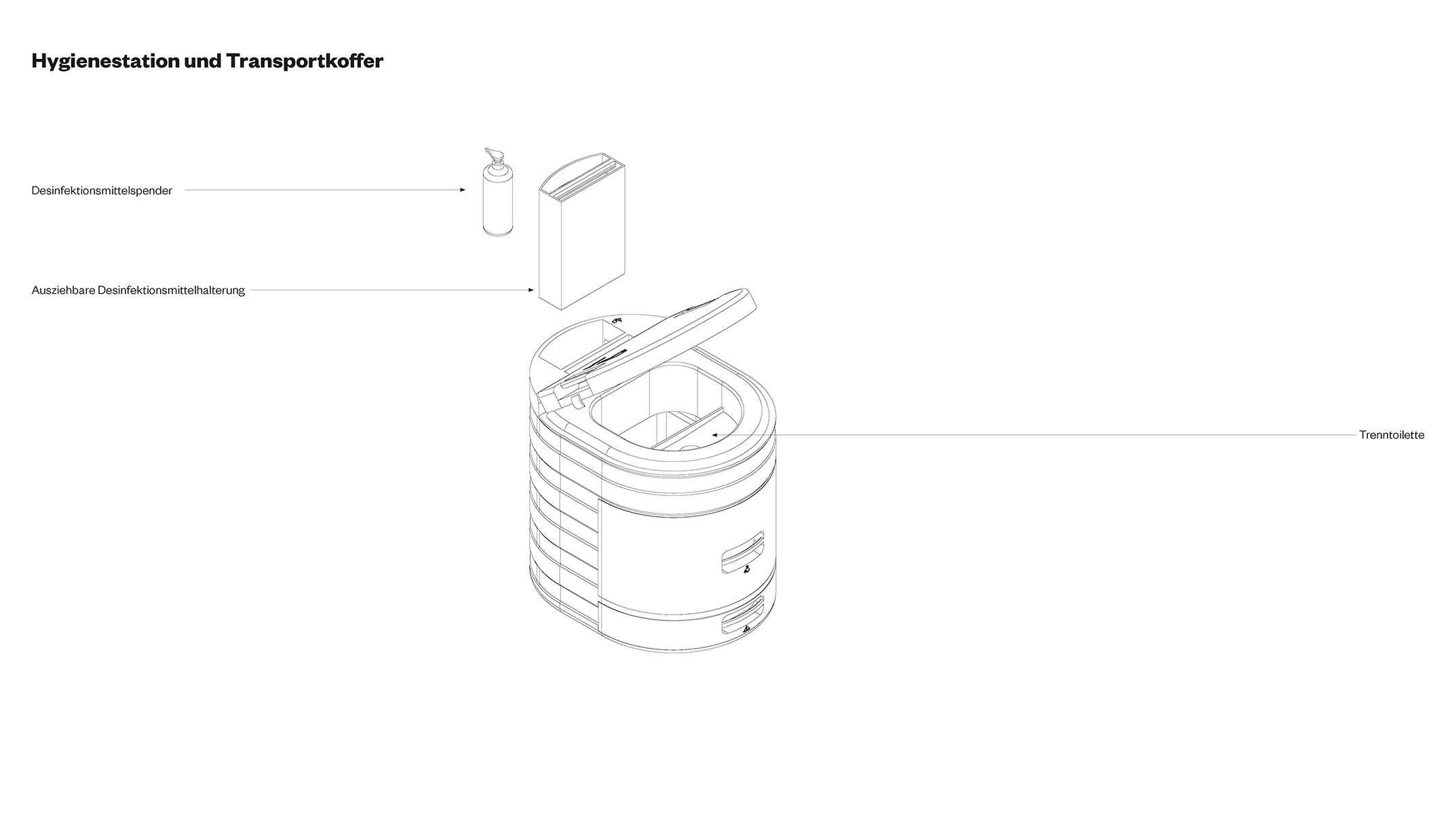
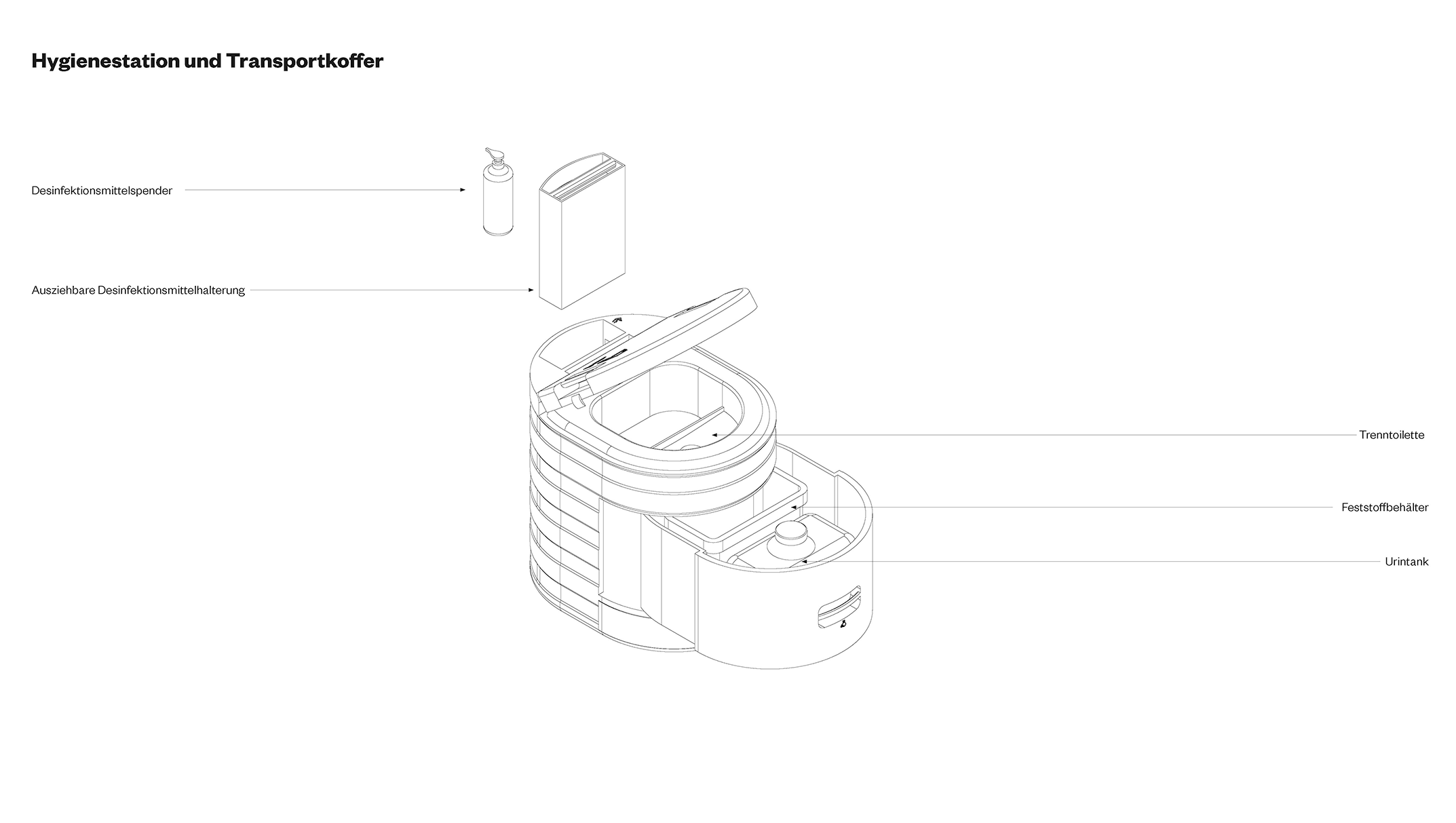
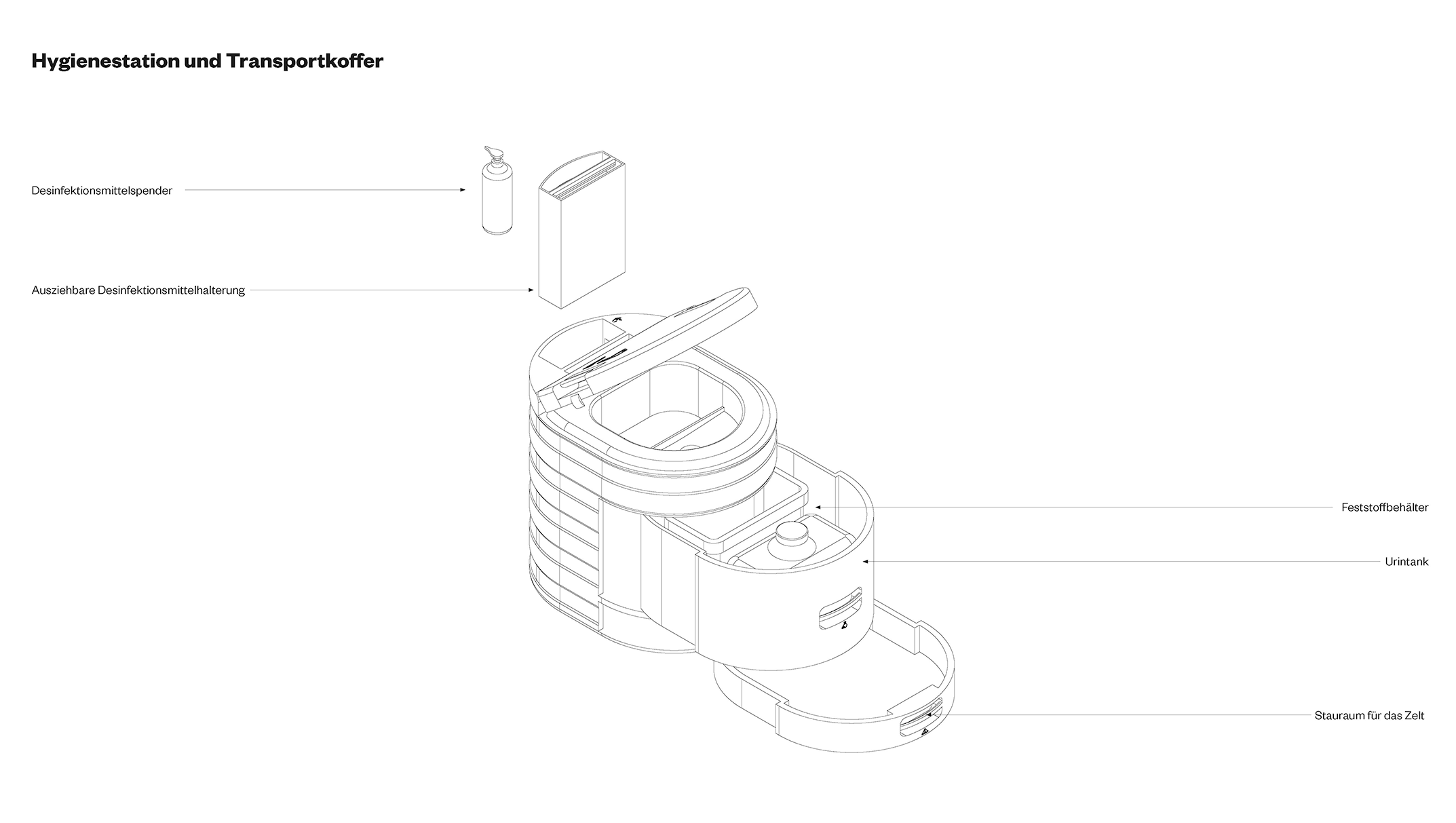
The tent is transported in a transport case that simultaneously functions as a hygiene station. After using the toilet, hands can be cleaned at the disinfectant dispenser. The separating toilet allows for simple disposal of human waste. The tent itself is stored and transported in the lowest drawer.
<


>
Final presentation